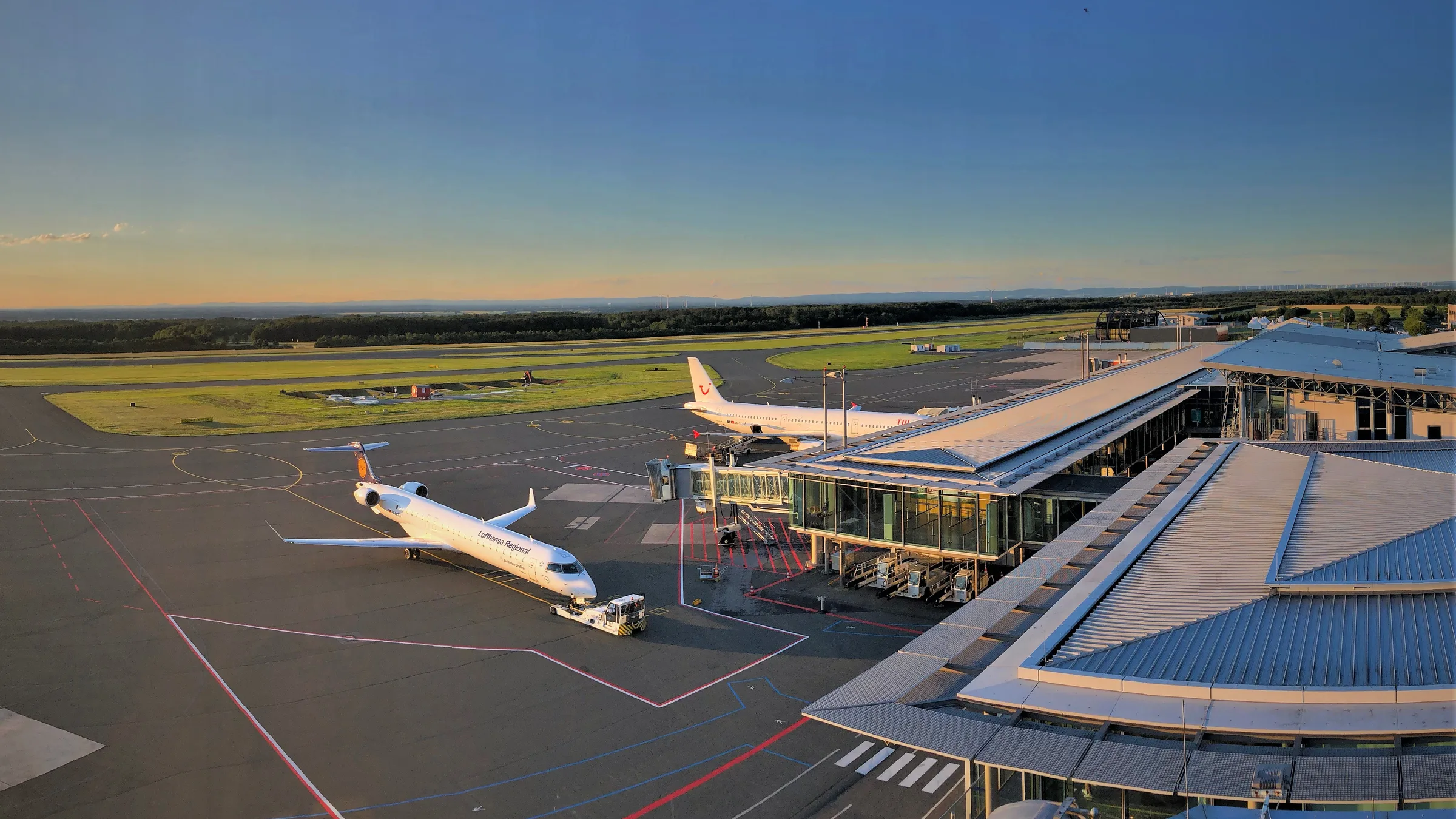
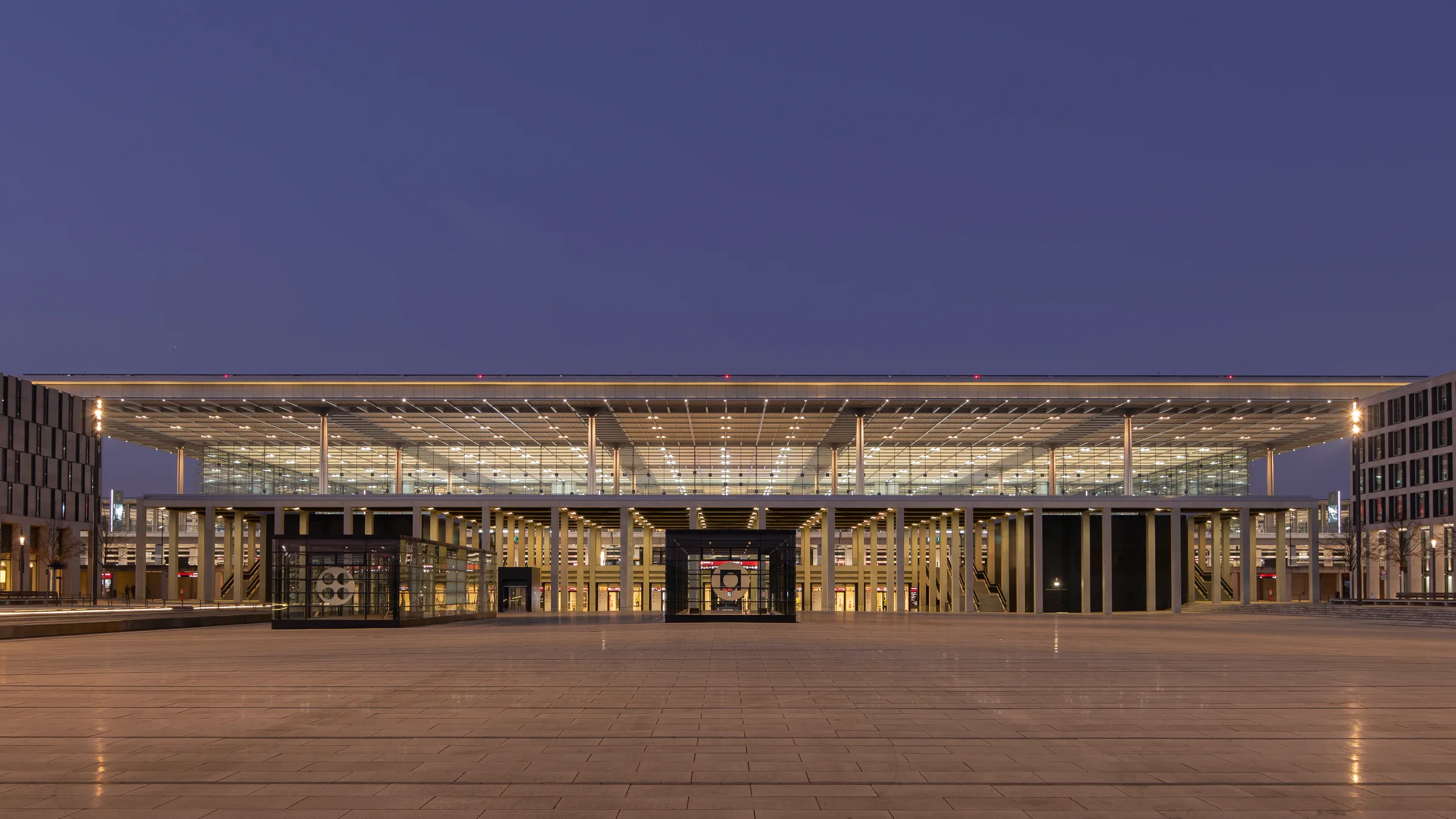
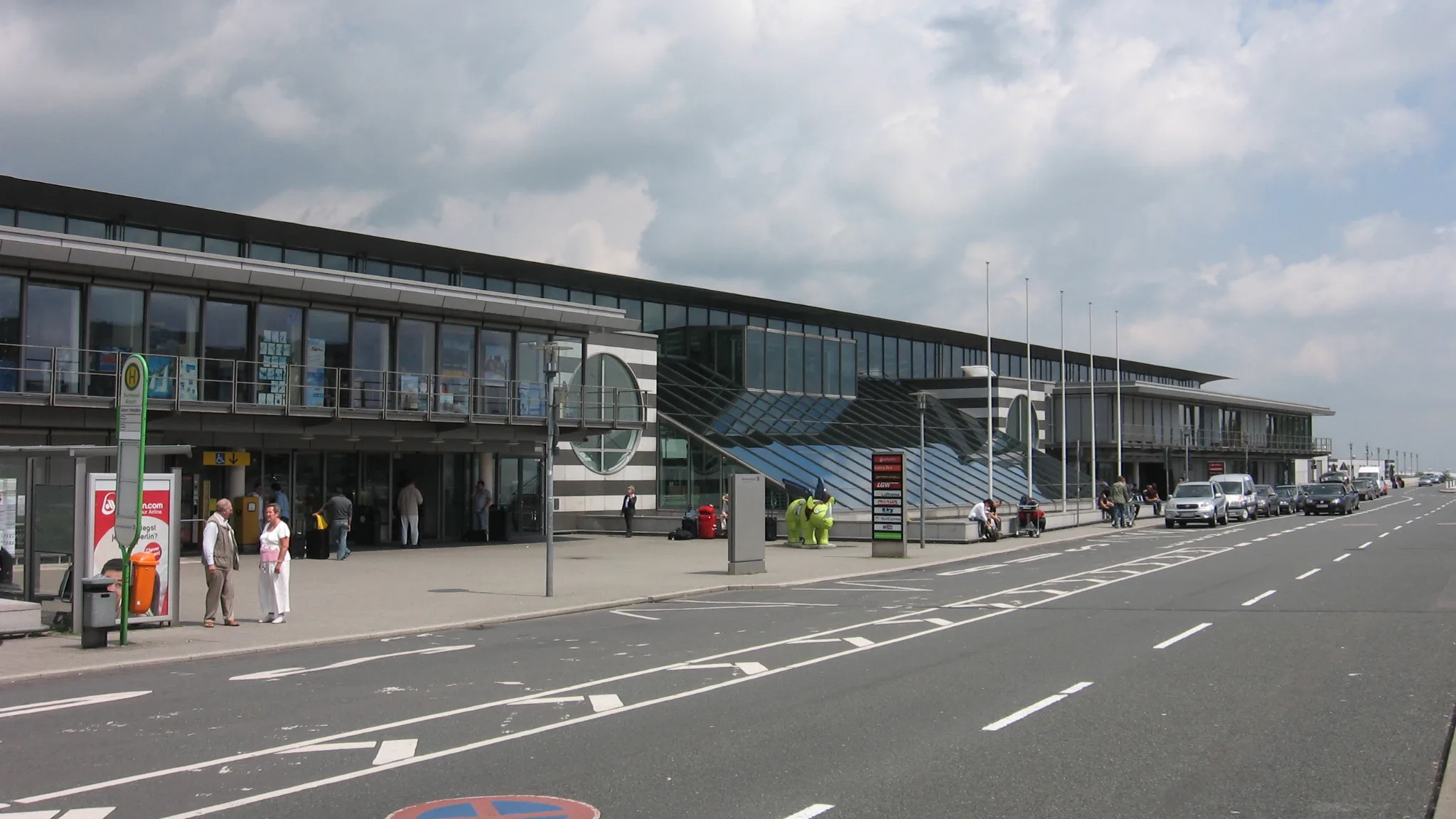
Hamburg is the oldest airport in Germany still operating, and it shows in the geography: the city grew around it, so it sits 8.5 km north of the centre in a residential district rather than out on a green-field site. That is the shortest airport-to-city distance of any major German hub, and it changes what an arrival here feels like.
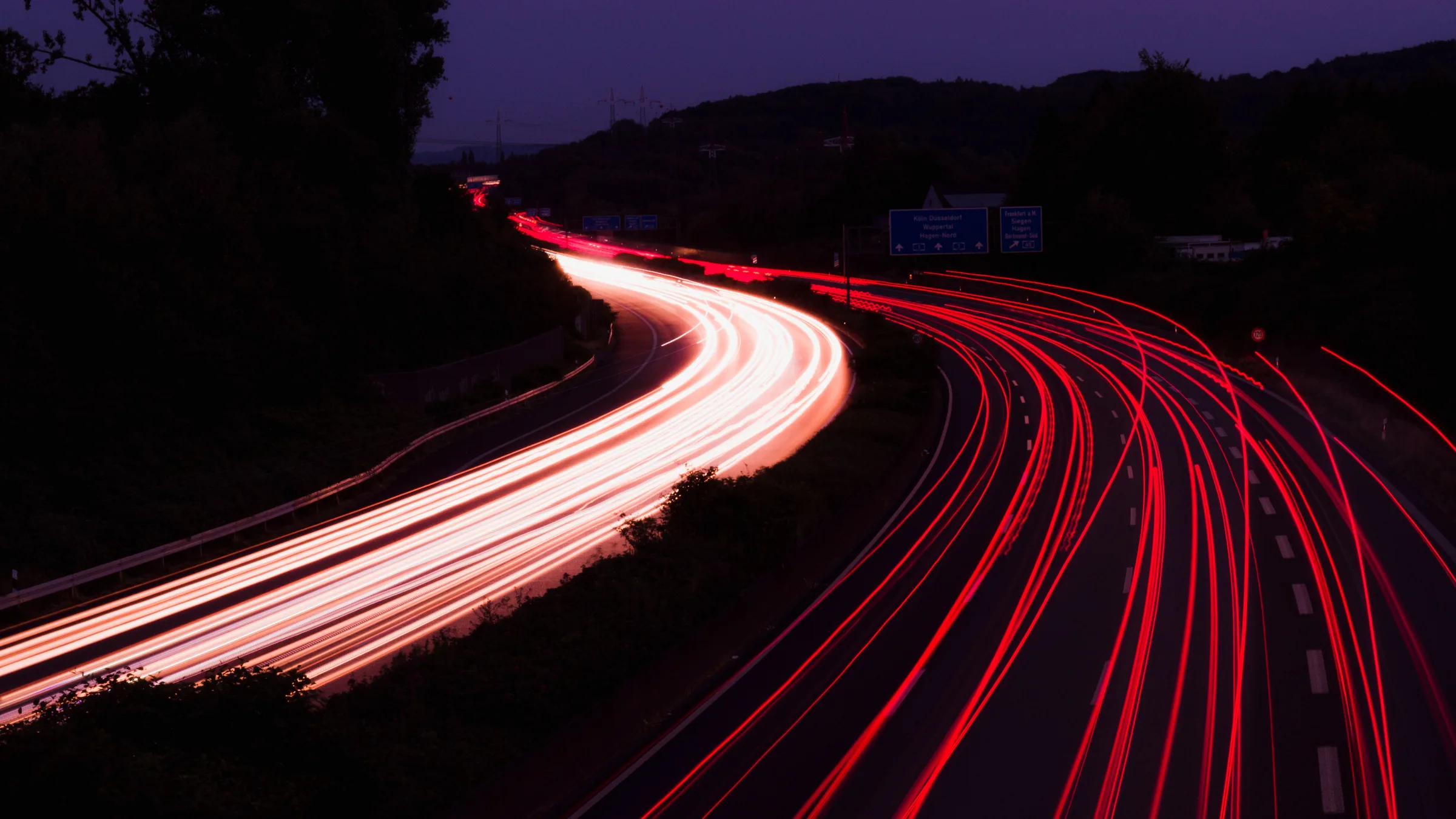
Road access is the A7 at the Schnelsen exit, then the B433 — Hamburg’s third ring road. The short distance does not always mean a short journey: the A7 through Hamburg carries one of the heaviest traffic loads in northern Europe, and the tunnel sections are where a fifteen-minute run becomes a forty-minute one.
Two terminals are joined by the Airport Plaza and share a baggage hall, which makes this an unusually simple airport to be collected from. Terminal 1 takes Oneworld and SkyTeam carriers, Terminal 2 takes Star Alliance including Lufthansa, and the two arrivals areas are about a minute apart. A late gate change costs you nothing here.
The proximity to housing has one consequence worth knowing: Hamburg has a night flight ban. The late-evening arrivals bank is therefore compressed, with everybody landing inside a short window before the curfew — which is exactly when the taxi rank and the S1 platform are at their worst, and exactly when a pre-booked car is worth the most.
The S1 runs from under the terminals into the Hauptbahnhof in around twenty-five minutes, and for a solo traveller that is the obvious choice — it is direct, frequent and cheap. We would rather point you at it than argue with it.
A car is the better tool when the destination is not central Hamburg. The Elbe splits the city and crossing it by public transport is slow; the port, the southern districts and much of the industrial belt are poorly served; and a destination that looks close on a map can be on the wrong side of a river with two crossings.
The regional case is stronger still. Lübeck, Kiel, Bremen, Travemünde, Sylt and the North Sea and Baltic coasts have no useful direct rail equivalent from the airport at all — every one of them means going into the Hauptbahnhof first and out again, with your luggage, having already landed. Groups arriving together in the compressed evening bank are the other case, when the S1 platform is at its fullest exactly when you reach it.
Your driver waits inside arrivals at Terminal 1 or Terminal 2, whichever your flight lands at, holding a name sign. Because the two terminals are connected by the Airport Plaza and share a baggage reclaim, the arrivals areas are about a minute apart — this is one of the easiest German airports to be met at, and a late terminal change is not a problem here the way it is at Frankfurt or Munich. Flights are tracked from the number given at booking, and 60 minutes of free waiting after touchdown is included.