Dortmund is a low-cost airport at the eastern end of the densest urban region in Germany, and both halves of that sentence matter.
The traffic is dominated by low-cost and leisure carriers — Wizz Air treats it as a focus city, and Condor, Eurowings, Pegasus and SunExpress fly leisure and eastern European routes from it. That means early departures, late arrivals and a schedule that does not care what the local trains are doing. It also means a passenger mix skewed toward families, groups and people visiting relatives, all of whom travel with more luggage than a business traveller.
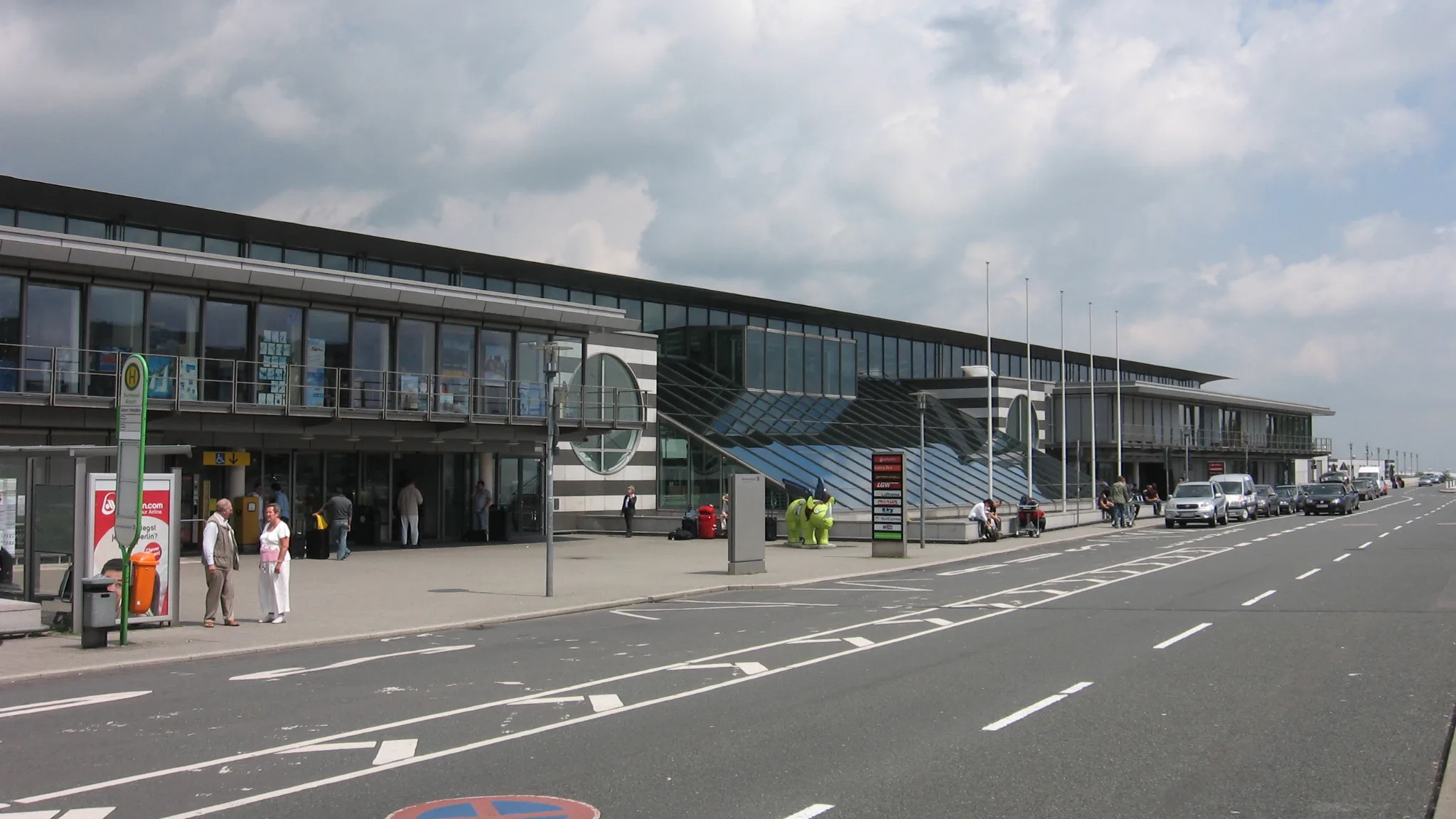
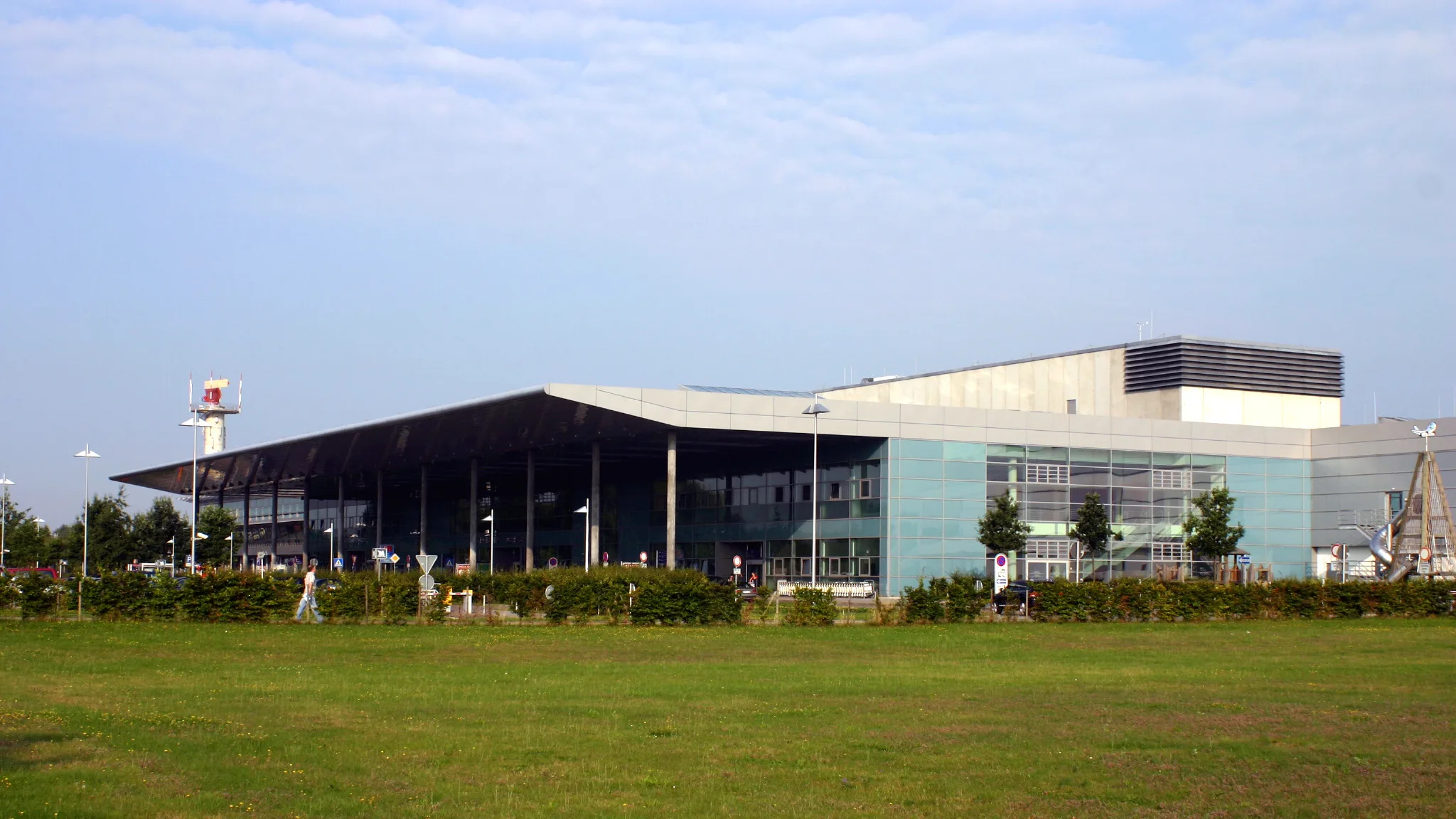
The location means an unusual number of large cities are a short drive away rather than a long one: Bochum, Hagen, Hamm, Unna, Witten and Dortmund itself are all close, and Essen and Düsseldorf are reachable. One multi-level terminal completed in 2000 handles everything, and arrivals come out of a single door — which is worth something at one in the morning.
Road access is the A44 with the B1 running in from the west, and the A1 north–south not far off. The airport sits at Holzwickede on the eastern edge of the Ruhr, which puts the Sauerland within reach in one direction and the whole conurbation in the other.
A shuttle bus connects the terminal to Holzwickede station and to Dortmund, and there is a rail connection onward from there. It works, it is cheap, and for a single traveller in daylight it is the reasonable choice — take it if that describes your trip.
The problem is the timetable rather than the route. This airport’s defining trait is arrivals late at night and departures very early, precisely when the connection is thinnest and a missed link means a long wait in a small terminal. A 05:00 departure means being at the terminal at 03:30, and nothing scheduled gets you there.
The Ruhr’s geography is the second half. A journey of twenty kilometres here can cross three transport authorities and need two changes, because the region is thirty cities that grew into each other rather than one city with suburbs. Add a family’s worth of luggage from a leisure flight and the case for one direct vehicle makes itself.
You are met in the arrivals area of the single terminal, with a name sign. Dortmund has one passenger building and arrivals come out of one door, so there is no terminal to get wrong and no long walk after a late landing. Flights are tracked from the number given at booking. The 60 minutes of free waiting after touchdown is worth more here than the number suggests — on this airport’s schedule a great many arrivals are after midnight, when there is no rank and no fallback if a pickup is missed.
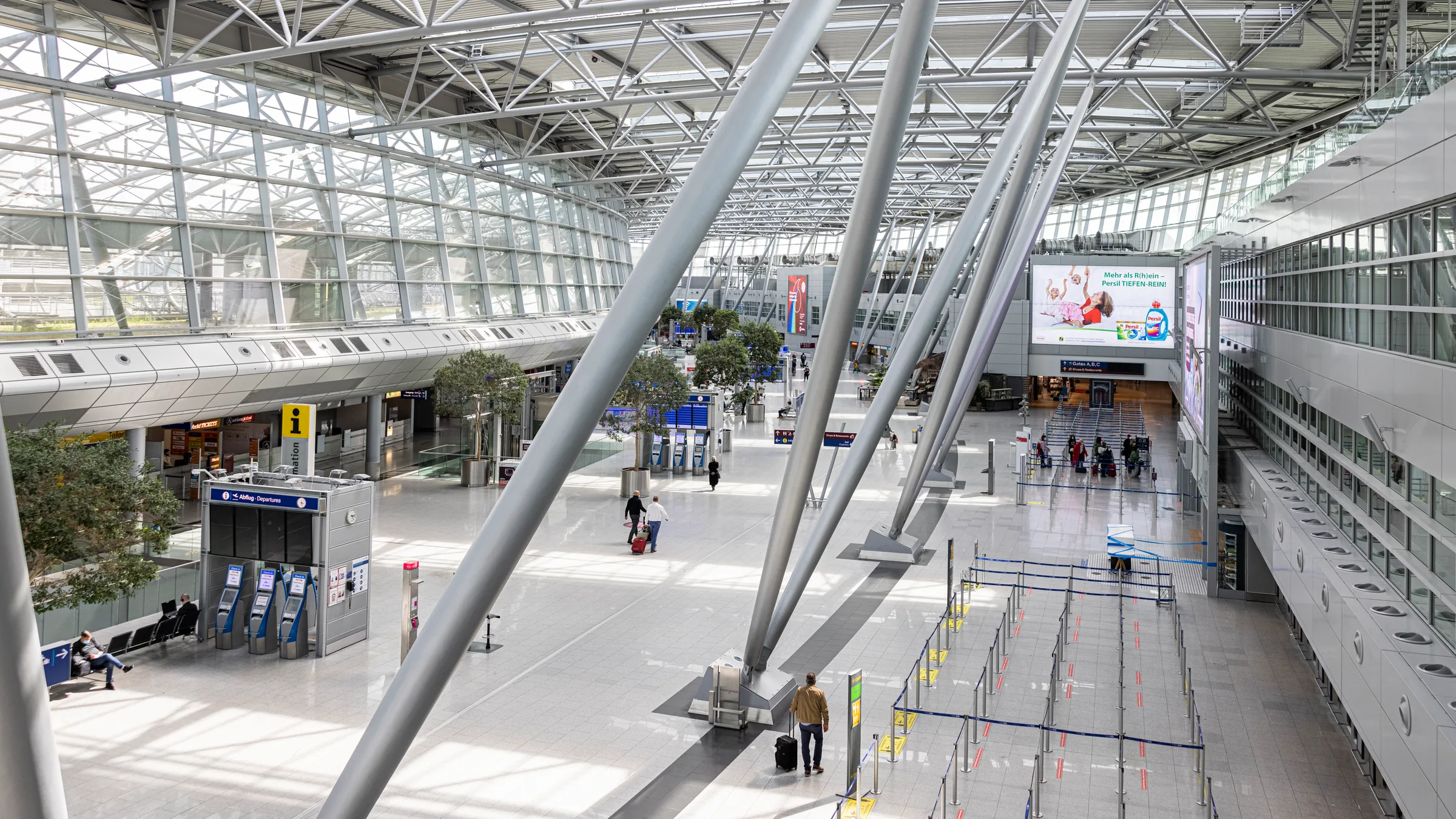
One multi-level terminal, completed in 2000, and small enough that arrivals is a single door. On a late low-cost arrival that is worth more than it sounds: there is no hall to cross, no second exit to guess at, and nobody standing in the wrong one.
The Kiss & Fly zone is free for a full thirty minutes, which is the most generous stop of any airport we serve. The catch is in the geometry rather than the tariff — it is on the departures level, level 1, and not outside arrivals. A car meeting you at the door is a car one level above the one you walked out of, and that is the single most common misunderstanding at this airport.
Dortmund’s schedule belongs to Wizz Air and Ryanair, which means arrivals landing close to midnight and departures before six. That is the whole case for a booked car here, and it is a narrow but real one: at those hours there is no rank to fall back on and the regional rail service is at its thinnest. Thirty free minutes at the kerb is no help at all to somebody with nobody waiting in them.