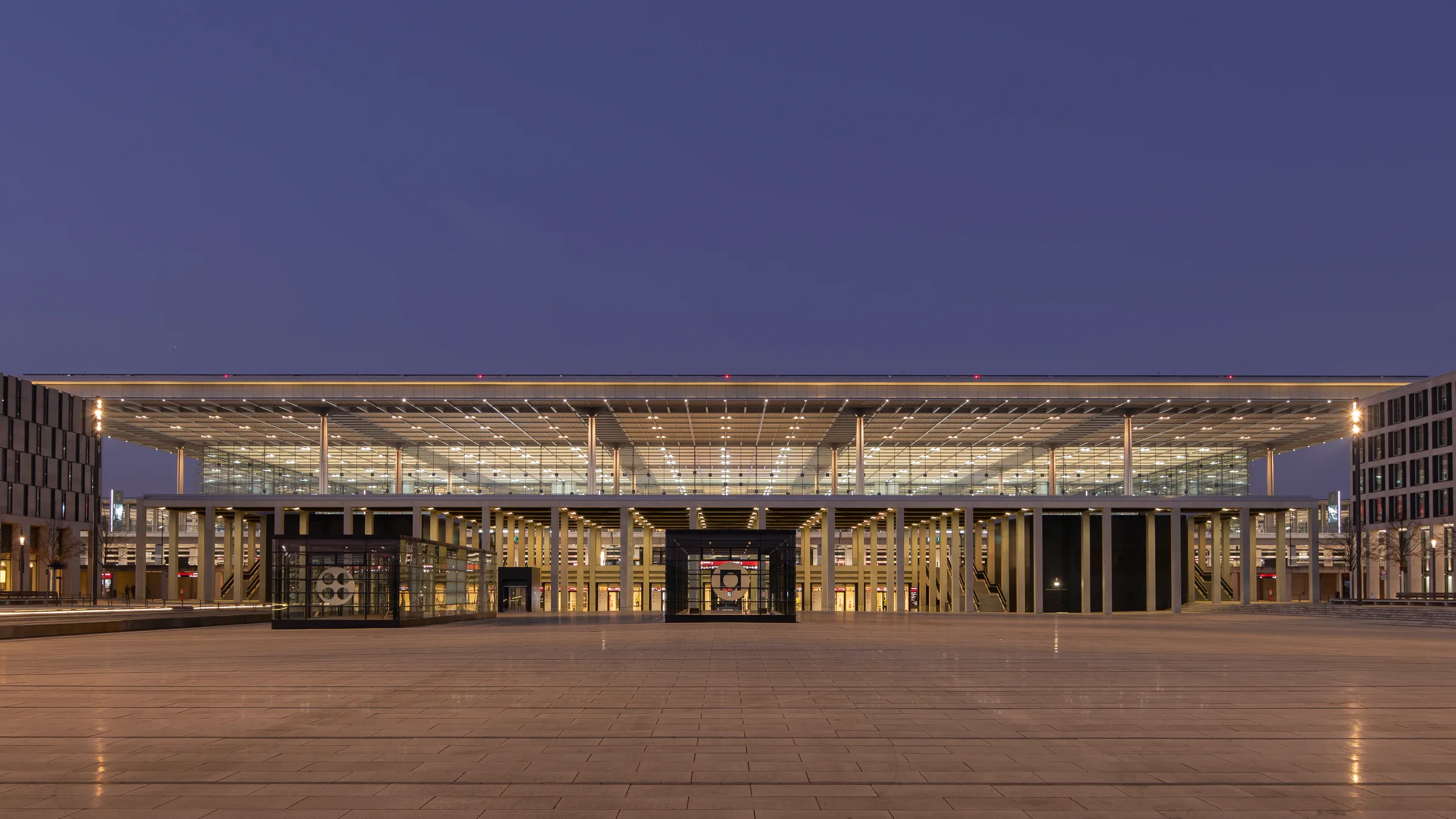
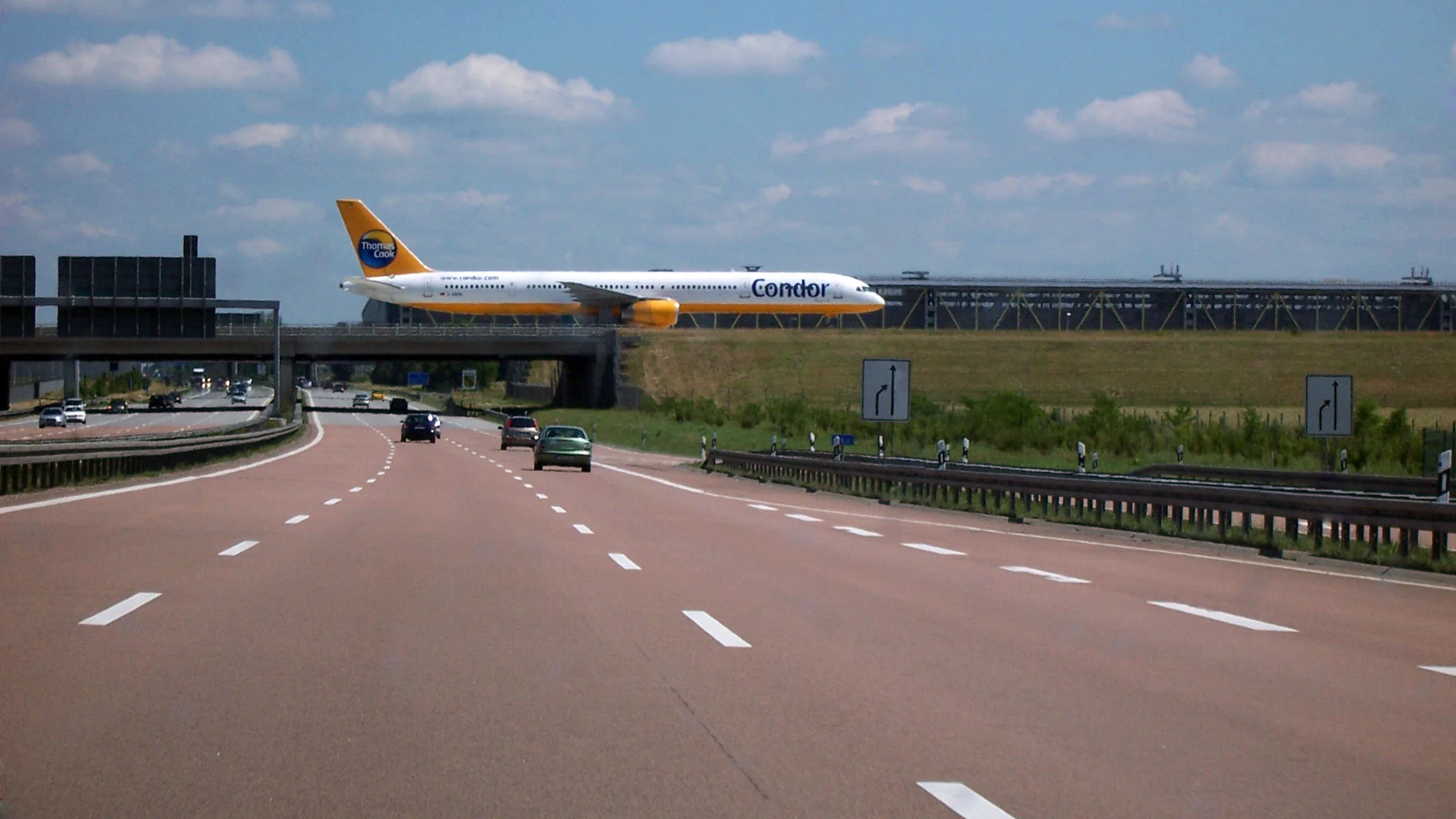
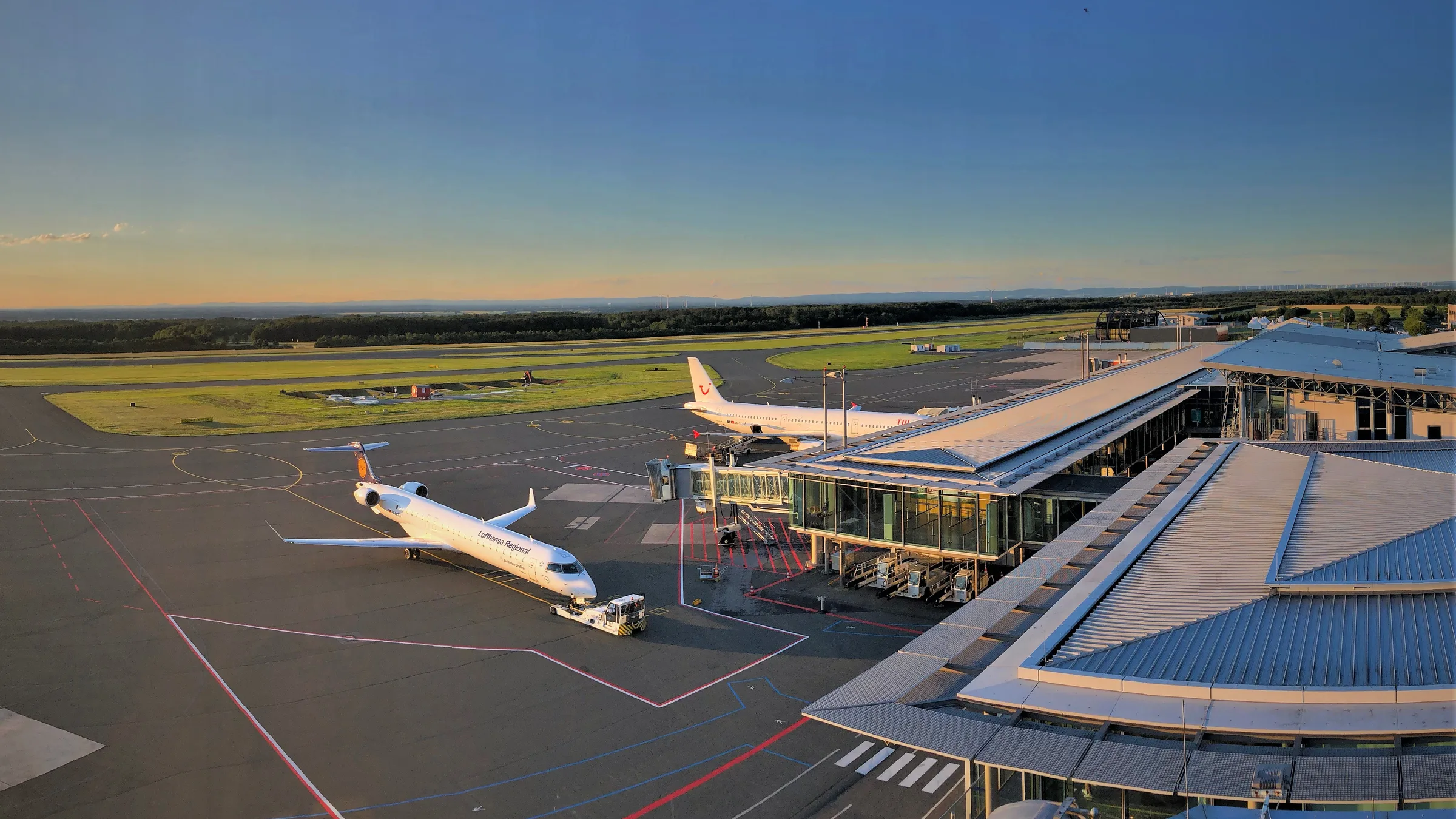
BER replaced Tegel and Schönefeld and absorbed everything both of them used to do, which is why the geography surprises people who last flew to Berlin years ago. The airport is not in Berlin at all but in Brandenburg, 18 km south-east of the centre, reached by the A113 or the B96a. Tegel, which was famously close to the city, is gone — closed in 2020 — and nothing replaced its convenience.
Two terminals are in use. Terminal 1 is the main building, with the railway station directly beneath it. Terminal 2 has been open since March 2022 and handles low-cost carriers including Ryanair and Wizz Air; it is a short walk from Terminal 1 rather than a shuttle ride, which makes BER easier to be met at than its size suggests.
Terminal 5 — the old Schönefeld building — closed permanently in November 2022. It is not somewhere to be dropped off, whatever an old booking confirmation, a stale map or an out-of-date guide may still say. This is the single most common piece of misinformation about this airport and the one worth checking before you travel.
Berlin itself is the other half of the story. It is enormous and low-rise, roughly nine times the area of Paris with a fraction of the density, and it has no single centre — the government quarter, the main business districts, the university campuses and the tech offices are scattered across it. An airport journey here is far more likely to end somewhere other than Mitte than it would be in any other German city.
The station under Terminal 1 is served by regional trains and the S-Bahn, and for one person heading to central Berlin the Flughafenexpress is fast, cheap and hard to argue with — take it. It is a genuinely good connection and it runs frequently.
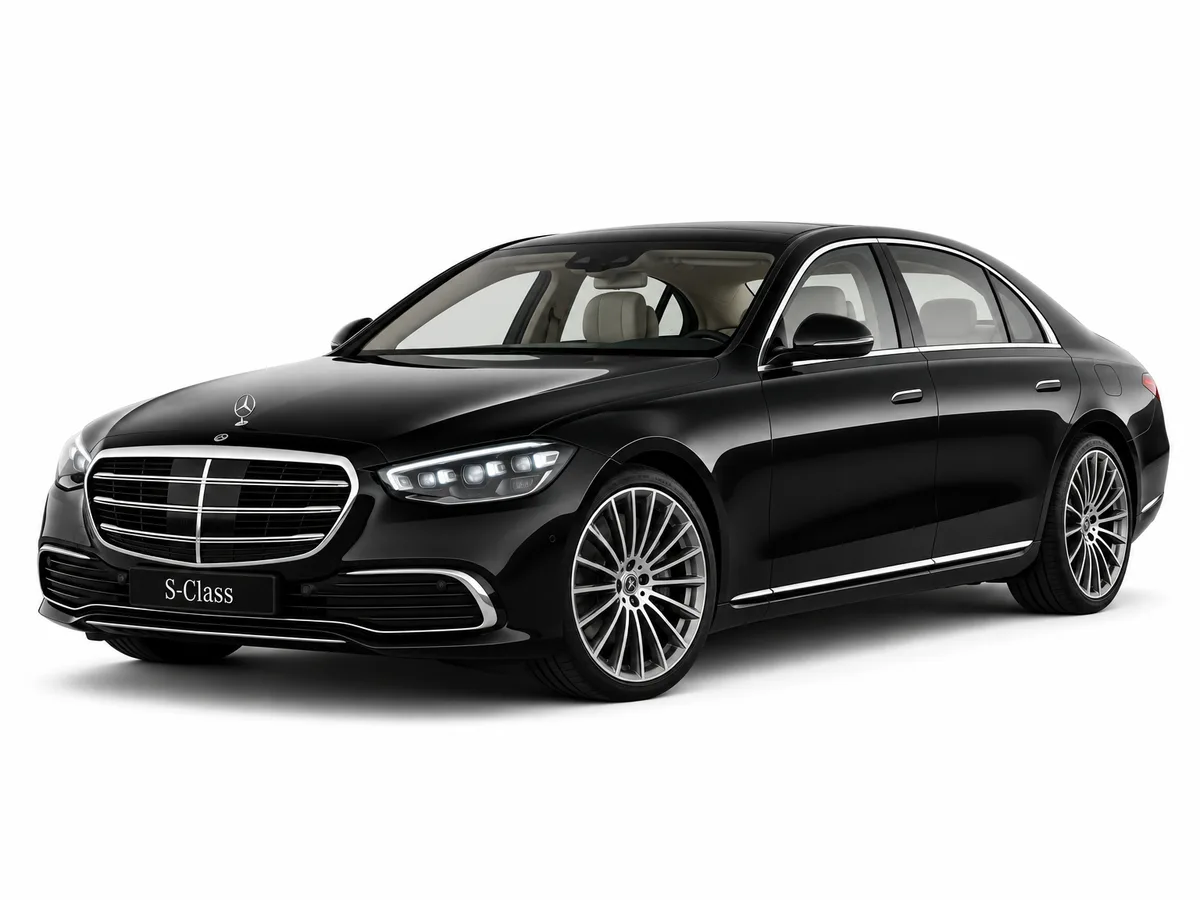
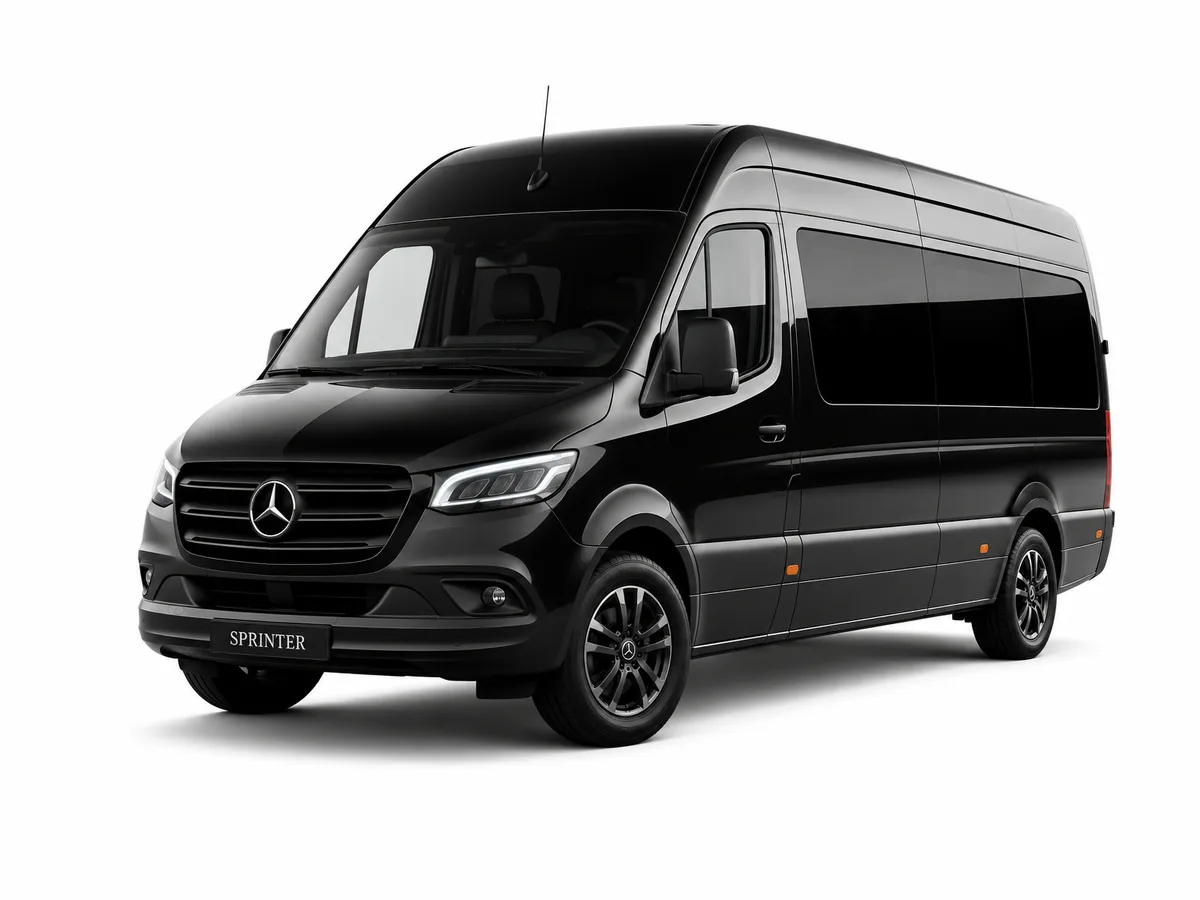
The argument for a car is Berlin’s shape rather than its centre. Most addresses are nowhere near a mainline station, and an S-Bahn journey to somewhere like Spandau, Pankow, Köpenick or the outer east turns into a change and then a tram, with your cases, at whatever hour you happen to land. Twenty minutes of train becomes an hour of journey remarkably easily here.
Timing is the second factor and it is specific to Terminal 2. Low-cost schedules push a lot of departures into the early morning and arrivals into the late evening, on both sides of the window in which a usable connection exists. A 05:30 check-in at BER means leaving central Berlin at a time the S-Bahn is not helping with, and the fare for a booked car does not change with the hour.
Your driver waits in the arrivals area of Terminal 1 or Terminal 2 — whichever your flight lands at, taken from the flight number you give at booking — holding a name sign. The two terminals have separate arrivals areas but are a short walk apart, so a late gate change is a minor inconvenience here rather than a crisis. No pickup is arranged at Terminal 5, which has been closed since November 2022. Flights are tracked automatically and 60 minutes of free waiting after touchdown is included.