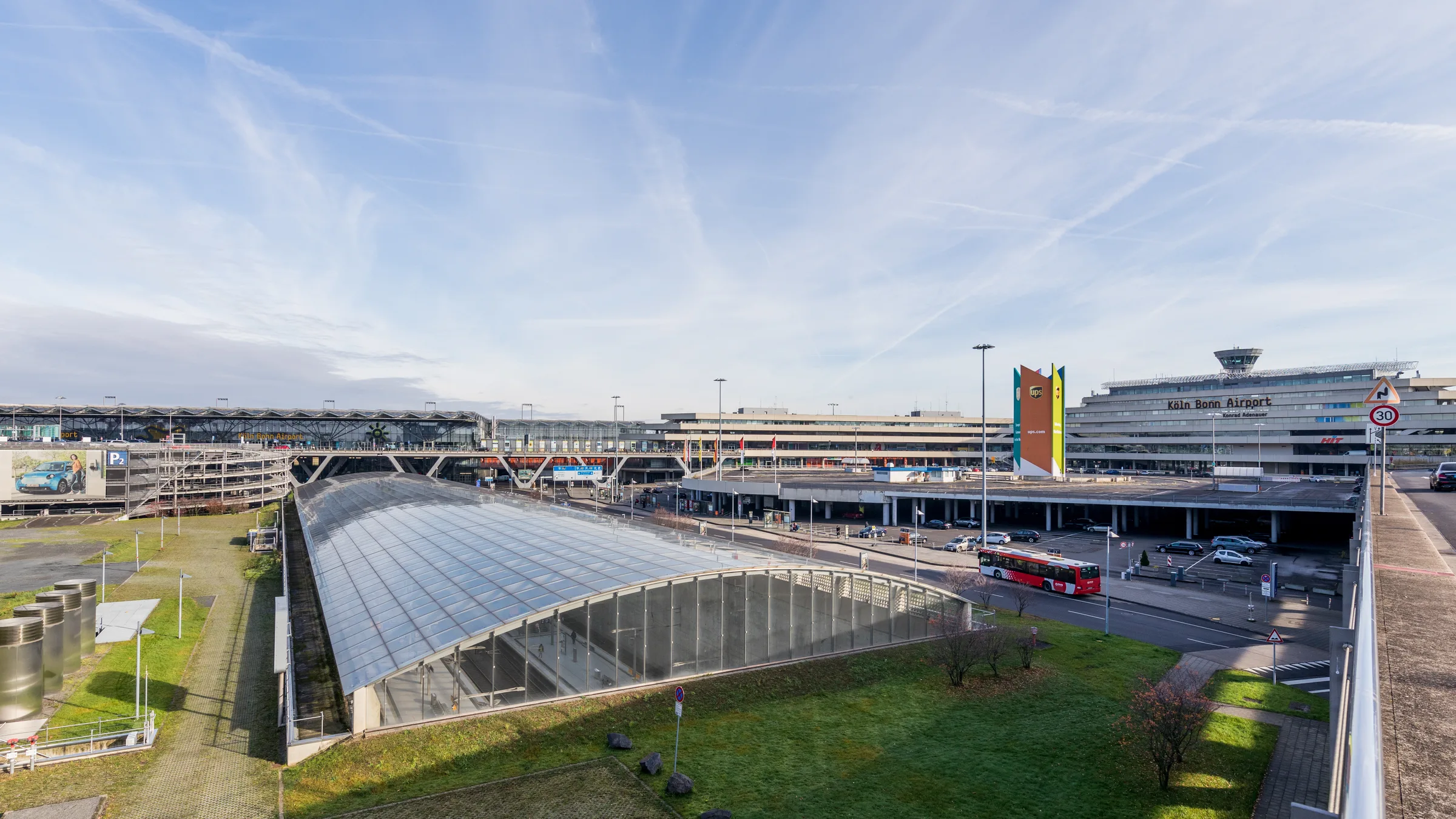
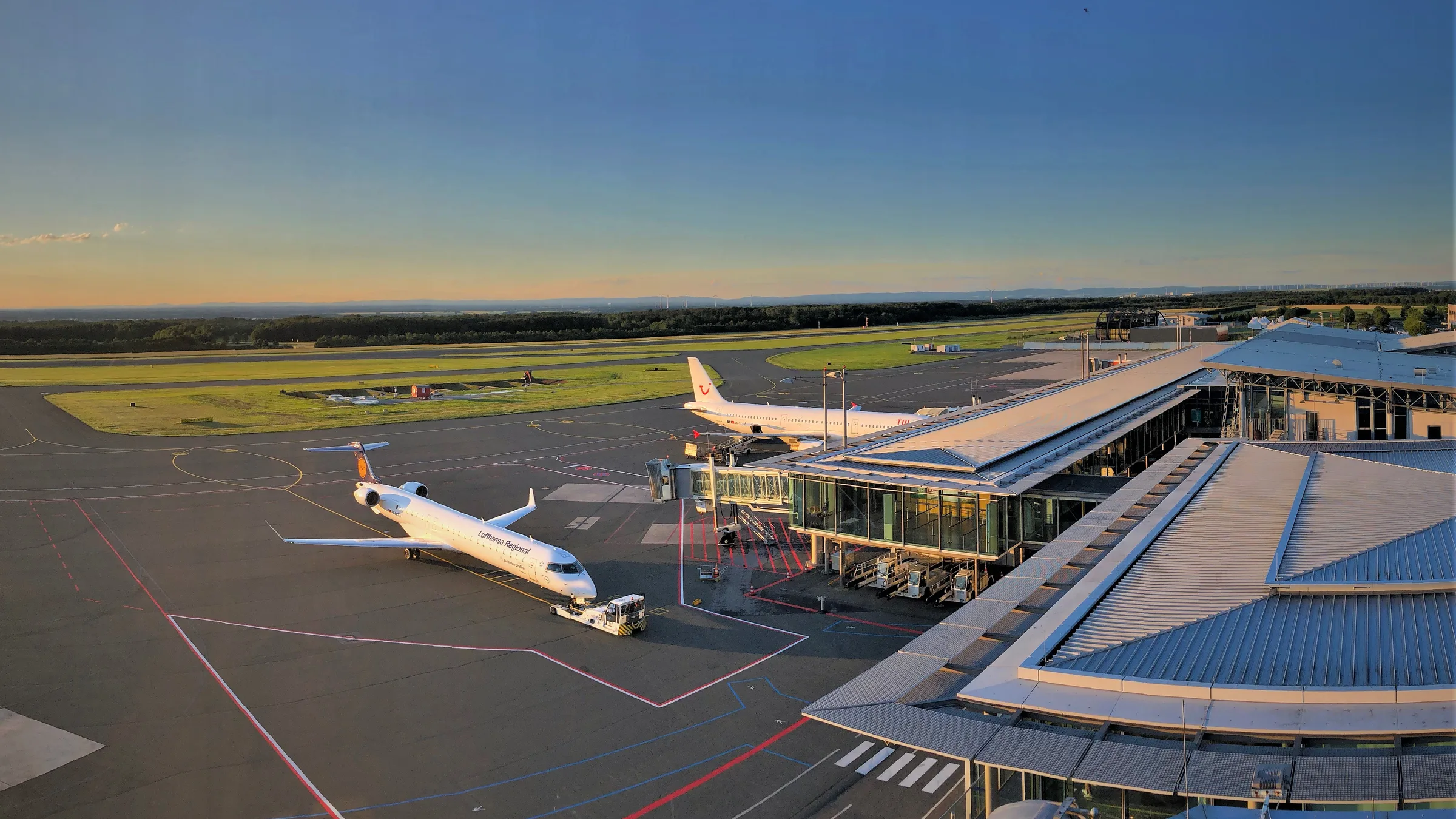
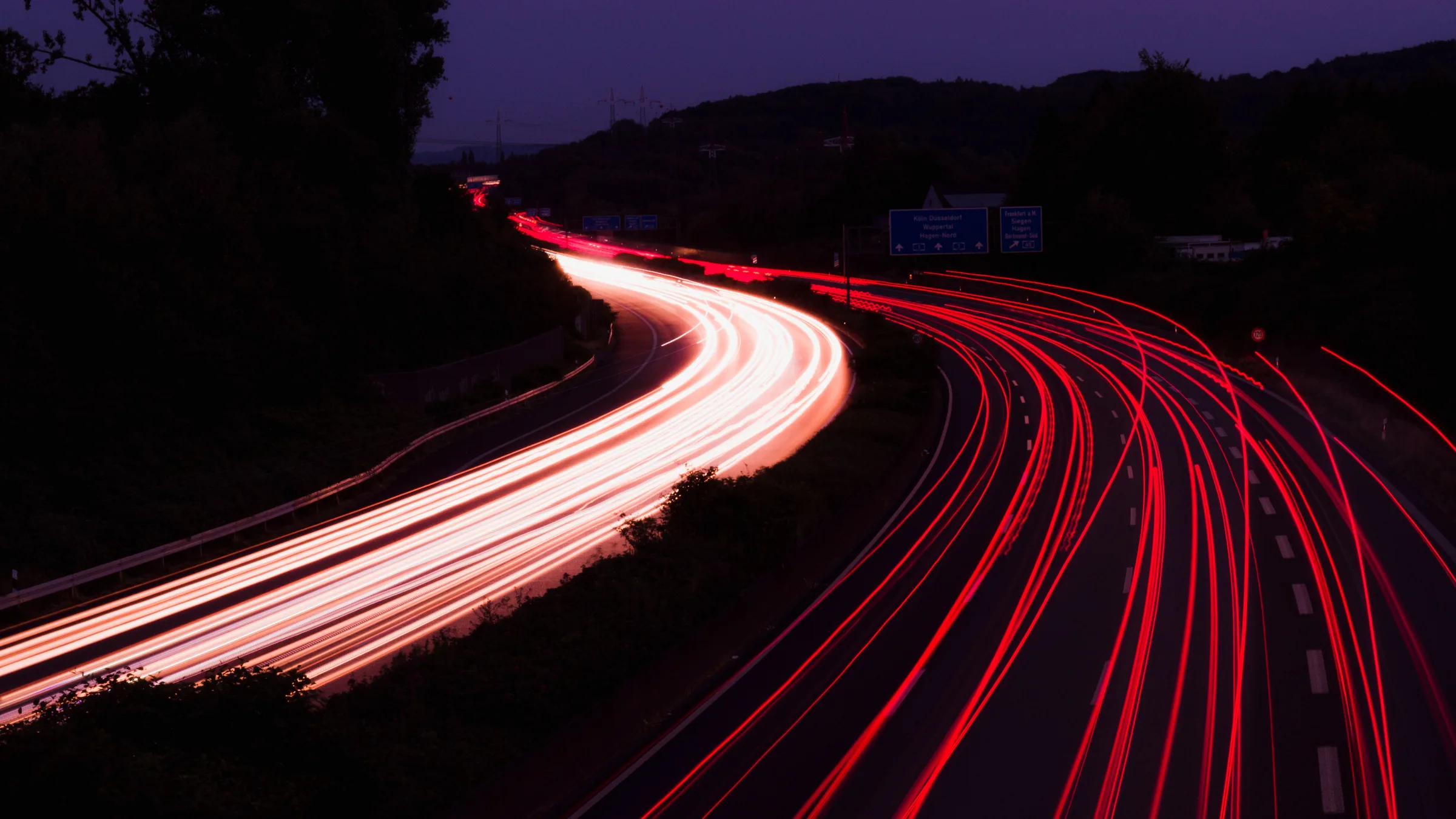
The airport lies about 15 km south-east of Cologne on the A59, roughly a quarter of an hour from Cologne itself and about the same from Bonn. Serving two cities from between them is unusual, and it is the whole character of the place: this is not Cologne’s airport with Bonn attached, it is genuinely equidistant, and the traffic splits accordingly between a large consumer city and a government and UN city.
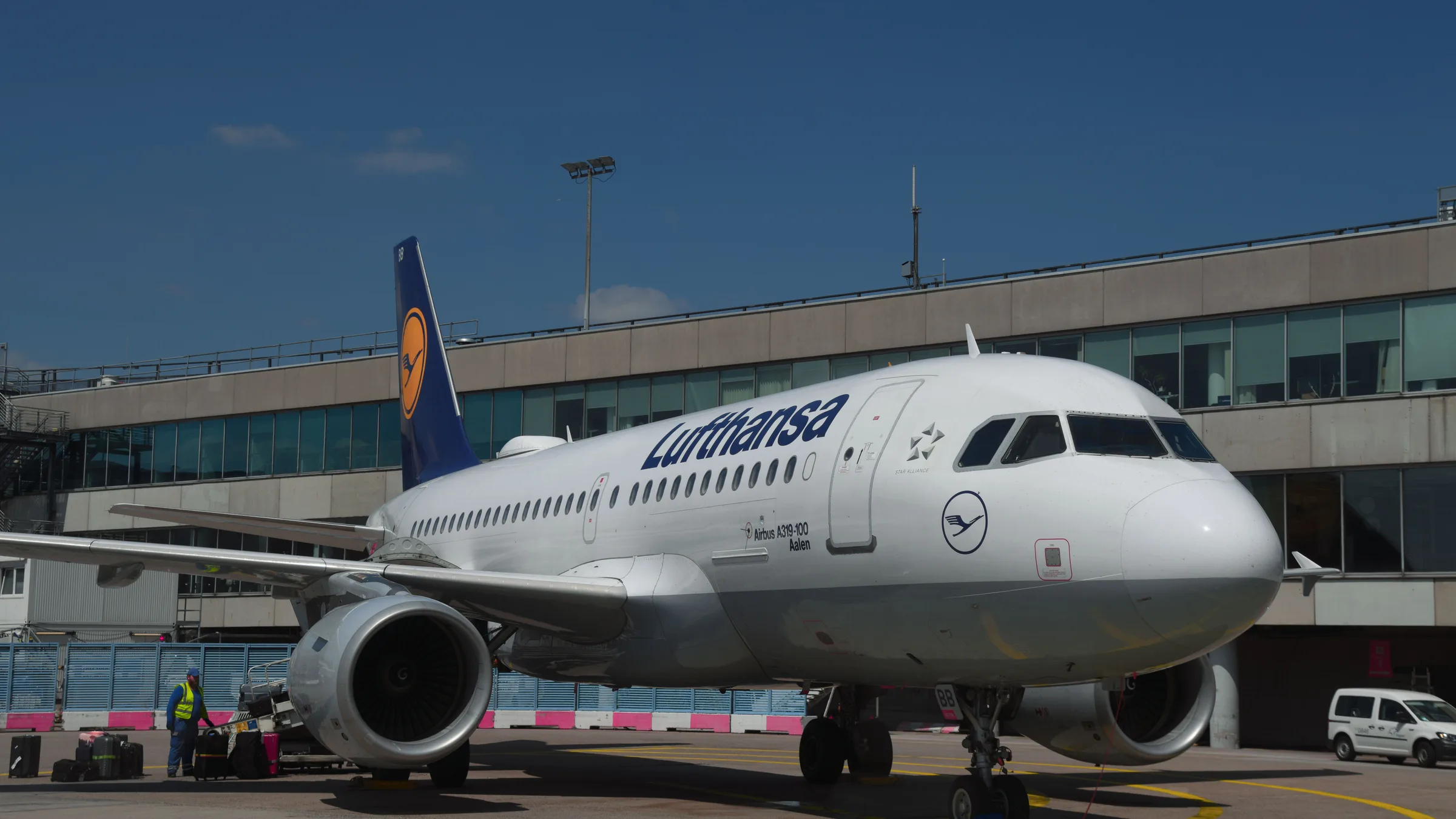
It has two terminals. Terminal 1 is the main building with 13 gates and handles Lufthansa, Eurowings, Austrian and Ryanair; Terminal 2 opened in 2000 with 8 gates for the remaining carriers. Both are served by the same access road, so neither adds to the fare and neither is difficult to reach.
Cologne Bonn also runs a substantial night operation — it is one of the few German airports without a hard night flight ban, and a major freight hub as a result. That is exactly when public transport is at its thinnest and a pre-booked car is worth the most. An arrival at three in the morning is normal here in a way it is not at Düsseldorf or Hamburg.
The surrounding geography is more varied than a city airport usually gets. Bonn and the former government quarter sit south, the Bergisches Land rises to the east, Brühl and Phantasialand are west, and the Rhine runs through all of it. Very few of those destinations are well served by a station.
The airport has its own railway station with direct services into Cologne, and for one person with hand luggage that is the cheapest way into the city. It is quick, it is frequent during the day, and we would rather point you at it than sell you a car you do not need.
The case for a private transfer is strongest elsewhere. Bonn is about 25 km away and less well connected than Cologne despite being equally close. Leverkusen, Brühl, the towns of the Bergisches Land and the Rhine villages all involve changes. Phantasialand is around 35 km — close enough to be a short drive and awkward enough by public transport to be worth avoiding entirely, which is why it is one of the most-booked family transfers here.
The night operation is the other half of the argument, and it is specific to this airport. Rail services thin out sharply after midnight and the first trains are not early enough for a 06:00 departure. Because the fare here does not change with the hour, a three-in-the-morning pickup costs the same as a midday one — there is no unsociable-hours surcharge to price around.
Pickup is at the terminal your flight arrives at — Terminal 1 or Terminal 2 — identified from the flight number you give at booking. Your driver waits inside arrivals with a name sign rather than at a rank, and both terminals sit on the same access road, so neither adds anything to the fare. Flights are tracked automatically, and 60 minutes of free waiting after touchdown covers passport control and baggage reclaim. On the overnight arrivals this airport is known for, that waiting window matters more than usual: there is no queue of taxis to fall back on at 03:00.